


The Neuroscience of Corporate Worship
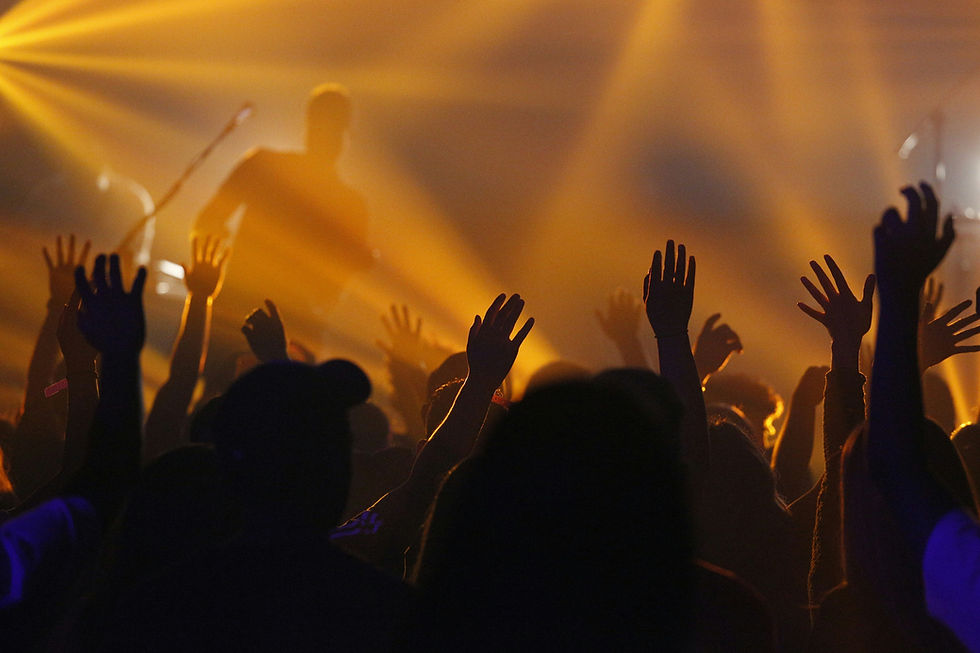
“For where two or three gather in my name, there I am with them.” (Matthew 18:20)
For centuries, corporate worship has been understood primarily as a spiritual discipline; a sacred gathering where believers collectively adore God, strengthen one another, and encounter His presence. Long before neuroscience existed, Scripture emphasized the transformative power of worshipping together.
Today, neuroscience is uncovering something remarkable: while science cannot measure God’s presence or prove supernatural experiences, it can observe what happens inside the human brain and body during collective worship. What researchers are finding is extraordinary.
Corporate worship appears to activate some of the brain’s most sophisticated systems responsible for emotion, social connection, attention, memory, stress regulation, and interpersonal synchrony. The more scientists study collective singing and synchronized participation, the more they discover that human beings seem biologically designed to connect through shared rhythms, shared voices, and shared attention.
The findings are not evidence that worship is merely neurological. Rather, they reveal that the Creator may have designed the human nervous system to flourish in practices He instituted thousands of years ago.
Your Brain Was Never Designed to Worship Alone
The human brain is fundamentally social.
Unlike many species, our brains constantly monitors other people’s voices, facial expressions, breathing patterns, movement, and emotional states. Entire neural networks exist simply to help humans connect with one another.
When believers enter corporate worship, they unknowingly participate in one of the most neurologically synchronized activities humans can perform:
singing together
breathing together
clapping together
moving together
focusing attention on one central object: God
experiencing shared emotional meaning
Neuroscientists describe this as interpersonal synchrony.
Rather than functioning as isolated brains, groups begin behaving like interconnected nervous systems.
Studies using EEG hyperscanning show that during meaningful social interactions, and especially musical interaction - the brain activity of participants becomes measurably more synchronized. This “brain-to-brain coupling” is associated with improved empathy, cooperation, communication, and shared understanding.
In simple terms, corporate worship doesn’t simply unite hearts spiritually, it also aligns minds biologically.
Singing Together Literally Changes Brain Chemistry
Perhaps the strongest body of evidence comes from research on group singing.
Choir studies consistently demonstrate that singing together produces psychological and biological effects beyond those observed when people simply speak together.
One landmark study involving 71 choir members compared four conditions:
singing together
singing alone
speaking together
speaking alone
Researchers measured salivary oxytocin, cortisol, testosterone, emotional state, and feelings of social connection.
The results were striking.
Participants reported significantly greater positive emotions and stronger feelings of social connectedness after singing together than after speaking together. The hormonal patterns also suggested that collective singing promotes biological processes associated with affiliation and bonding beyond ordinary conversation.
This suggests something profound. Corporate worship goes beyond music with religious lyrics. It is a biologically unique social experience.
Oxytocin: The Chemistry of Belonging
Oxytocin is often called the “bonding hormone.” It plays important roles in trust, attachment, empathy, generosity, generosity, parental bonding and social safety.
Although oxytocin responses during singing are complex and vary across studies, research consistently shows that collective singing enhances feelings of social connectedness and may engage oxytocin-related bonding processes more strongly than comparable non-musical group activities.
When a congregation sings, “I surrender all…”, their brains are not only processing lyrics - they are simultaneously strengthening the neurobiology of being a part of a community.
Worship Quietens the Brain’s Alarm System
Modern life keeps many nervous systems in a state of chronic alert. From endless emails, deadlines, conflict and even financial pressure.
These continuously activate stress pathways.Collective singing, however, appears to reduce physiological markers of stress.
Multiple studies report reductions in stress-related hormones and improved emotional states following group singing, although some hormonal changes are influenced by factors such as time of day and study conditions.
This helps explain why many believers leave worship feeling lighter - even before circumstances change.
The nervous system has shifted from vigilance toward regulation.
The Hidden Power of Shared Breathing
One of the least appreciated aspects of worship is the breathing rhythm.
When congregations sing, breathing naturally slows and becomes more synchronized.
Researchers studying choir singers have found increased synchronization of breathing and heart-rate variability during collective singing. This coordinated breathing supports parasympathetic (“rest-and-digest”) nervous system activity and physiological regulation.
Every worship song is therefore also a breathing exercise.
Long phrases… Slow inhalations… Extended exhalations…
These patterns naturally calm the nervous system. The congregation is not merely singing - but collectively regulating thousands of nervous systems simultaneously.
Worship Creates a Shared Emotional Brain
Humans possess specialized neural systems for emotional contagion. We instinctively mirror smiles, tears, laughter, excitement and also calmness. During corporate worship these systems amplify.
One person’s gratitude encourages another’s. One person’s joy becomes contagious. One person’s faith strengthens someone else’s hope.
Neuroscientists call this social entertainment. Scripture simply calls it encouragement.
Music Activates Nearly the Entire Brain
Unlike most human activities, music recruits almost every major brain network simultaneously.
During worship, the brain integrates: auditory processing, language, emotion, movement, memory, prediction, reward and attention. Only a few experiences activate so many neural systems at once.
This may explain why worship songs remain memorable decades later. A sermon may be forgotten. A worship chorus often becomes permanently embedded in memory.
The Reward System and Joy
Music activates the brain’s reward circuitry, including dopamine-related pathways that support motivation, anticipation, and pleasure.
In worship, this reward response is paired with meaning, gratitude, hope, and shared belief rather than mere entertainment.
The result is a form of joy that is both emotional and deeply relational.
Scientists describe this as coordinated activation of reward and social systems. Christians call it rejoicing in the Lord. Can we get a hallelujah?! ….
Unity Is More Than a Metaphor
Paul described the Church as one body. Modern neuroscience has unexpectedly discovered something similar.
During synchronized activities, humans increasingly coordinate various aspects of neural activity.
Corporate worship therefore becomes a living demonstration of unity, not because every brain becomes identical, but because individuals temporarily align their attention and behavior toward a shared purpose.
Where Science Stops
Neuroscience can explain why worship calms anxiety. It can explain why singing strengthens a community. It can explain why shared rhythms promote connection. It can explain why believers leave church feeling emotionally renewed.
But neuroscience cannot explain the presence of God. No MRI can detect the Holy Spirit. No EEG can measure divine encounter.
Science can describe the instrument. It cannot fully explain the musician. The brain may explain how humans experience worship.
It cannot answer Who they are worshipping.
Finally…
Perhaps the most astonishing discovery is not that worship changes the brain. It is that the brain appears exquisitely designed for worship.
The Creator fashioned billions of neurons capable of synchronizing with others through rhythm, song, attention, and love. Long before neuroscientists spoke of synchrony, oxytocin, autonomic regulation, or neural coupling, Scripture commanded believers:
“Do not give up meeting together.” Hebrews 10:25
Thousands of years later, science is discovering that gathering together does far more than create religious tradition.
It shapes the brain. It regulates the body. It strengthens relationships. It deepens belonging.
And while neuroscience can map the pathways activated during corporate worship, the deepest mystery remains beyond the reach of any scanner: that through ordinary voices lifted together, millions of believers testify that they encounter an extraordinary God.


Comments