


15 Christian Artists You’ll Wish You Discovered Sooner

Christian music is getting harder to define and that is a good thing if you ask us. The most interesting faith-filled music being made right now does not always arrive with a familiar worship-band arrangement, a predictable chorus or a sound that immediately announces itself as “Christian Music.” Sometimes it sounds like indie rock. Sometimes it lives somewhere between neo-soul and R&B. Sometimes it is rap, bedroom pop, acoustic folk or stripped-back worship. And sometimes it sounds like something that does not have an obvious category at all.
What connects these artists is not a particular genre.
It is the conviction beneath the art.
They create music from different corners of the Christian experience: intimacy with God, surrender, grief, identity, joy, doubt, redemption, romance, holiness, community and the ordinary details of being human. Their music does not all point to Christ in the same way and that is precisely what makes this list worth exploring.
Some will feel like worship. Others will feel like a late-night conversation with God. Some will make you dance. Others might make you sit still for a while. So if your idea of Christian music has been limited to what you hear on Sunday mornings, consider this your invitation to listen wider.
1. Ashwood House - Worship That Feels Like a Gathering, Not a Production
Ashwood House is perhaps best understood not simply as an artist but as a creative worship community. Based in Los Angeles, Ashwood describes itself around worship nights, friendship, family, the presence of God and authentic artistic expression. It presents a growing catalogue of worship sessions and is interested in creating a space where worship can feel lived-in rather than manufactured.
There is something deliberately communal about
Ashwood’s music. Rather than making worship feel like a performance from a distant stage, the House concept creates the impression of people gathering in a room simply because they want to encounter God together. Their sessions feature a rotating collection of worshippers and artists, including collaborations with names such as Eniola Abioye and others from the contemporary worship scene.
For listeners who are tired of overly polished worship productions and want something that feels intimate, communal and spiritually present, Ashwood House is worth entering.
2. Nate Diaz - Worship With a Global, Charismatic Heart
Nate Diaz carries a distinctly worship-first approach. He is passionate about the presence of God and committed to ministering to the Lord through worship. There is a warmth to Diaz’s music that makes it feel less like an attempt to impress an audience and more like an attempt to lead listeners somewhere.
His music is particularly suited to listeners who love worship that carries movement - music that can exist both in personal devotion and in a room full of people singing together. Diaz’s artistry consistently places Jesus above the platform. His own description of his calling is essentially that everything he does is because Jesus is worthy.
If you want passionate, congregational worship with a contemporary global sound, he offers you that soundtrack.
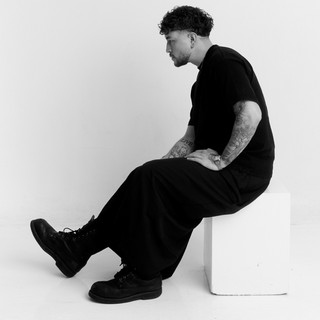
3. Tenroc - When a Hitmaker Turns His Attention Fully to God
Tenroc might be one of the most fascinating names on this list because he arrived at his artist identity from behind the scenes. The New York-bred producer has spent years working with major artists and has accumulated an extraordinary production résumé, including Grammy-recognised work. In 2026, however, he stepped forward as an artist in his own right with “God Is A Person.” And he did not make a conventional Christian album.
Tenroc deliberately came into the Christian Music scene to create something strange, soulful, experimental and unmistakably his own. His music is especially compelling because his faith does not feel like an aesthetic added to his production style. It is the subject of the work.
Tenroc is exploring what it means to relate to God as a living, personal reality rather than an abstract religious concept. If you love R&B, pop and experimental music that speaks of Christ without sonic predictability, Tenroc is your guy.
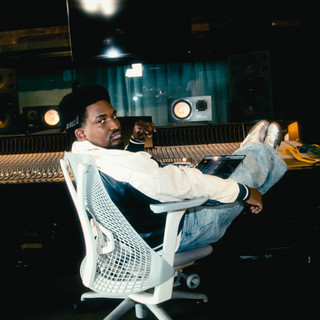
4. nobigdyl. - Faith Without Sanitising the Human Experience
nobigdyl. has spent years demonstrating that Christian hip-hop does not have to sound like a sermon over a beat.
His music is introspective, adventurous and stylistically restless. His catalogue moves through alternative hip-hop, trap, melodic rap and experimental production, while his lyrics regularly wrestle with identity, temptation, ambition, culture and discipleship. What makes nobigdyl. compelling is his ability to allow faith to exist inside the complexity of real life.
He does not need to pretend that following Christ eliminates every internal conflict. Instead, the tension becomes part of the testimony. There is confidence in his music, but also vulnerability. There is cultural awareness without abandoning conviction. And there is a willingness to experiment rather than reproduce whatever is currently working in Christian rap.
His work is particularly valuable for listeners who want music that feels contemporary enough to live comfortably beside mainstream hip-hop while remaining unapologetically rooted in Christ.
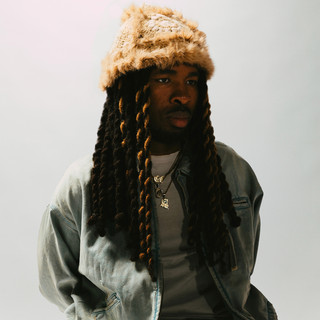
5. Abbie Gamboa - The Sound of Being Fathered by God
Abbie Gamboa’s music feels deeply personal because the centre of it is deeply personal: what does it mean to know God as Father?
Fan groups describe Gamboa’s artistic heartbeat as helping a generation understand God as Father and friend, something shaped by her own discovery of what it means to be fathered by God.
Her songs are intimate rather than merely declarative. She is not simply telling listeners who God is; she is inviting them into the experience of being known, loved and held by Him. Gamboa’s music makes the theology of God’s fatherhood feel relational rather than theoretical.
She makes music for anyone who wants worship that feels like a conversation with a loving Father.

6. Brett Younker - Worship Built to Last Beyond the Moment
Brett Younker’s influence stretches far beyond his own artist catalogue. As a songwriter, he has been behind songs performed by Passion, Kristian Stanfill, Jesus Culture and others, including “Build My Life,” “God, You’re So Good” and “More Like Jesus.” Spotify’s songwriter platform credits him with more than 90 songs.
But his 2026 album Keep The Faith offers a particularly interesting picture of where his artistry is now. What distinguishes Younker is his ability to write worship that feels structurally simple but spiritually substantial.
His songs are not dependent on lyrical complexity for their power. They often work because they give listeners something they can actually carry: a declaration, a prayer, a posture. And perhaps that is why his songwriting has endured in congregational spaces.
His music repeatedly brings worship back to the character and worthiness of God rather than the performance of the worshipper.
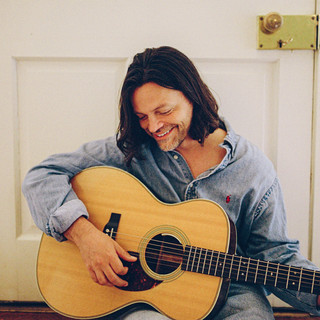
7. Mark Barlow - Soul Music With a Gospel Centre
If Christian music had a stronger conversation with classic soul, Mark Barlow would be one of its most compelling voices. His music moves through retro cinematic soul, gospel, indie and pop, held together by a rich vocal delivery and deeply personal writing.
Barlow is particularly interesting because he does not appear interested in reducing himself to one version of Christian artistry. In discussing his work, he has explained that he does not feel boxed into making only explicitly Christian music and wants freedom for both faith-centred songs and more personal or creative expressions.
That freedom gives his music room to feel human.
Barlow demonstrates that Christian artistry does not have to sacrifice artistic sophistication in order to be spiritually sincere.

8. Ethan Beer - The Vulnerability of a Young Artist Growing Into His Calling
Ethan Beer represents a different kind of Christian artistry: youthful, acoustic and intensely personal.
The Brisbane-born singer-songwriter, multi-instrumentalist and producer began singing in church and school as a child, taught himself guitar and eventually expanded into piano, drums and production. His music blends narrative songwriting with polished acoustic-pop.
But what makes Beer interesting is not simply his musical ability. It is the way he understands identity.
In a 2026 conversation, Beer spoke about being “first and foremost His Son”- a powerful statement in an industry where artists can easily begin measuring themselves by streams, opportunities and visibility.
That perspective gives his music a grounded quality.
He also brings lived vulnerability to his work, including songs and conversations shaped by loss, hope and faith. Beer presents Christian identity as something deeper than an artist brand. Before the music comes sonship.
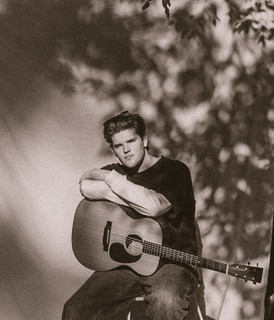
9. Eniola Anna - A Voice of Revival
Eniola Anna brings a thoughtful, revival-focused perspective to contemporary Christian music. Her work sits at the intersection of worship, conversation and spiritual formation, with a clear desire to point people back to Jesus while exploring what genuine revival looks like beyond a musical moment.
Her artistry appeals to listeners who want worship that does more than stir emotion - it challenges them to think, seek God deeper and examine their own hunger for Him. Through her music and wider creative work, Eniola reminds us that revival is not simply something we sing about; it is something we are called to live.
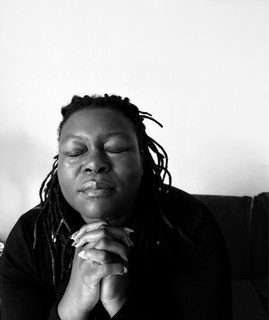
10. Strings & Heart - Indie Rock for People Who Want Something Real
Strings & Heart might be one of the clearest examples of what happens when Christian artists stop worrying about what Christian music is supposed to sound like.
The Tucson trio brothers - Angelo, Michael and Eric Espinosa; call themselves indie Christian, drawing inspiration from The Beatles, Nirvana, Switchfoot and The Beach Boys. Their sound can move from surf rock to indie pop while keeping faith at the centre.
Their story is equally compelling.
After a transformative encounter with Jesus, the brothers began taking music seriously as a calling rather than an obligation. They are not merely singing about Jesus. They are asking what it means to actually follow Him when nobody is watching.
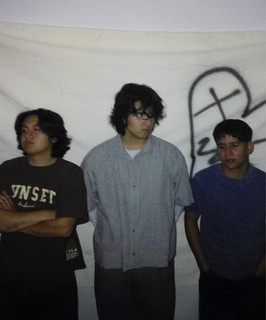
11. threetwenty - Neo-Soul for the Spiritually Curious
threetwenty is for the listener who loves neo-soul, R&B and contemporary production but still wants their music to leave them with something spiritually meaningful. Their creative work openly embraces neo-soul, Christian R&B and faith-based music, and their social presence makes that identity clear.
threetwenty understands that faith can be expressed through groove, restraint, atmosphere and honest reflection. Their music does not always demand that the listener stop everything and worship. Sometimes it simply sits beside you while you process life. It allows faith to become part of everyday emotional life rather than something reserved for explicitly religious moments.

12. Lani Rose - Where Pain, Honesty and Hope Meet
Lani Rose, the artist name of St. Louis-based Myles Anderson, creates the kind of music that does not run away from difficult emotions.
The Gospel Coalition recently highlighted him among its quality Christian music picks for 2026, describing his work as beautifully raw devotional music centred on the struggles of life meeting the hope of Christ.
That emotional honesty is central to his artistry.
Lani has spoken about returning to faith in 2021 and describes that period as when Christ found him and drew him back. His music reflects that journey rather than pretending the Christian life begins after every struggle has already been resolved.
There is something particularly important about this kind of Christian music: it gives people permission to admit that they are hurting without making hopelessness the final destination.
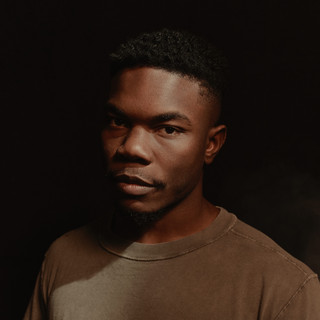
13. Grace Runkle - Soft Pop With an Uncomplicated Love for Jesus
Grace Runkle’s music feels like a diary written in melodies. Her Spotify bio “I write songs with my Dad (the heavenly one)” - reveals the relational simplicity at the heart of her artistry.
Her music doesn’t seem interested in making faith complicated for the sake of sounding profound. Instead, it embraces affection, longing, surrender and intimacy with God. There is a youthful freshness to her sound, but not a shallow one.
Grace presents faith as a relationship - something affectionate, personal and ongoing.
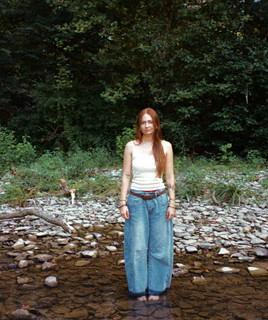
14. Ochaè - Christian R&B That Understands Modern Love and Redemption
Ochaè is one of the artists on this list who most clearly demonstrates how naturally R&B can carry Christian themes.
His music blends soul, R&B and gospel influences, but the story underneath it is even more significant.
According to his official biography, Ochaè gave his life to Christ in October 2024, after which music shifted from being simply a personal outlet into ministry.
Ochaè’s sound is important because it does not ask R&B listeners to abandon the musical language they already understand in order to encounter Christian themes.He brings the soul, intimacy and emotional richness of R&B into a faith context.
His conversion is not merely part of his biography; it has become the dividing line between music as self-expression and music as ministry. He makes music particularly for R&B lovers who want sensuality replaced by sincerity, vulnerability anchored in faith and modern production pointing toward Jesus.
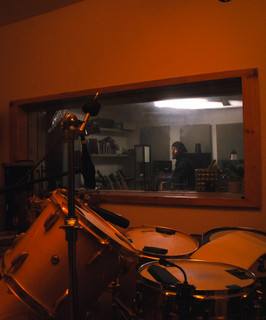
15. Jonathan Ogden - Music for the Quiet Places
And then there’s Jonathan Ogden’s sounds that would automatically make you want to slow down.
The Manchester-based independent artist describes his work as peaceful, yearning bedroom pop for baristas, daydreamers and people who cry at movies. His music has become particularly distinctive within
Christian indie because it refuses to rush. There is room for silence, contemplation, longing and beauty.
It feels like music for the moments nobody posts about: walking home alone, staring through a rainy window, journaling at midnight, grieving something you cannot quite explain or remembering that God is still there.
Ogden’s music treats faith not merely as celebration but as companionship; the quiet assurance that God remains present through grief, uncertainty and renewal.
For Introverts, dreamers, journalers, late-night thinkers and anyone who wants Christian music that feels like a deep breath.

What makes these artists worth discovering is not that they are all doing the same thing.They aren’t.
Ashwood House builds spaces for encounters. Nate Diaz carries worship into global, charismatic territory. Tenroc experiments with the sound of faith. nobigdyl. brings discipleship into contemporary hip-hop. Abbie Gamboa explores the tenderness of God’s fatherhood. Brett Younker writes worship that can outlive the moment. Mark Barlow gives Christian music the richness of soul. Ethan Beer turns vulnerability into testimony. Eniola Abioye creates music designed to make room for encounters with Jesus. Strings & Heart bring indie rock into the Christian conversation. threetwenty puts faith inside neo-soul. Lani Rose gives grief and hope permission to coexist. Grace Runkle writes from affection and intimacy with God. Ochaè turns R&B into a language for redemption. And Jonathan Ogden reminds us that sometimes worship sounds quiet.
That diversity may be one of the most beautiful things happening in Christian music right now. Because Christ does not need every artist to sound the same. He can be proclaimed through a guitar riff, a rap verse, a falsetto, a bedroom-pop melody, a soul groove, a congregational chorus or a song written in the middle of grief. He can meet the worshipper in a crowded room and the listener alone with headphones at 2 a.m.
And perhaps that is why these artists are worth pressing play on; not simply because they make Christian music, but because each of them is finding a different musical language for the same extraordinary truth: Jesus is still worth singing about.


Comments